Who Makes the Best Fondant Cakes in Pakistan?
Short answer
Judge fondant work by the top edge: a crisp, near-90-degree edge all the way round means the base coat was chilled and smoothed properly, while rounded or slumping edges mean it was rushed. Also check for fine cracking at the corners, patchy colour, and bulging around the middle. Those four tells identify skilled work in any photograph, from any bakery, better than any ranked list.
Any answer naming a single best fondant bakery in Pakistan goes stale within a year and is usually someone's marketing anyway. What does not go stale is knowing what to look at — and fondant is unusually easy to judge from a photograph once you know where to look.
Tell 1 — the top edge
The fastest and most reliable signal. A skilled decorator produces a crisp, near-90-degree edge all the way round the top of the cake. Rounded, soft or slumping edges mean the ganache or buttercream underneath was not chilled and smoothed properly before covering. It is the hardest thing to fake in a photograph and the thing amateurs get wrong most often.
Tell 2 — the surface
Fondant should look like a smooth matte shell. Fine cracking, usually at corners and edges, is called elephant skin and means the fondant dried out before it was smoothed. It indicates rushed or inexperienced covering.
Tell 3 — the colour
Colour should be even across the whole surface. Patchiness means it was painted on rather than kneaded through the fondant before rolling. Deep colours are the hardest — black, navy and deep red need far more colouring and more resting time, so a bakery showing clean saturated dark work is showing real skill.
Tell 4 — the silhouette
A bulge around the middle means the filling was not settled before covering and is now pushing outward. On tiered cakes, check the tiers sit level and square — leaning tiers mean the internal supports were inadequate.
| What you see | What it means |
|---|---|
| Sharp, straight top edge | Base coat chilled and smoothed properly |
| Rounded or slumping edge | Rushed base coat |
| Fine cracking at corners | Fondant dried before smoothing |
| Patchy colour | Colour painted on, not kneaded through |
| Bulge around the middle | Filling not settled before covering |
| Leaning tiers | Inadequate internal support |
What to ask before ordering
Ask what is underneath the fondant. A competent bakery puts buttercream or ganache beneath it, so the cake still tastes right when the shell is peeled off — which a significant share of guests will do. A bakery that puts fondant straight onto sponge is prioritising the photograph over the eating.
Cost and lead time
Fondant cakes in Pakistan run Rs 5,500–9,000 for 2–3 lb and Rs 8,000–13,000 for 3–4 lb, roughly double the equivalent buttercream cake. Allow three to four days, and a two pound minimum for the covering to sit properly. Anyone offering an elaborate fondant cake within hours is cutting something.
Send us a design and judge our work by those four tells before you commit.
See Our Fondant WorkFrequently Asked Questions
- How do I judge whether fondant work is good?
- Look at the top edge — crisp and near-90-degrees means skilled work, rounded or slumping means rushed. Then check for fine cracking at corners, patchy colour, and bulging around the middle.
- What is elephant skin on a fondant cake?
- Fine cracking on the fondant surface, usually at corners and edges, caused by the fondant drying out before it was smoothed. It indicates rushed or inexperienced covering.
- How much do fondant cakes cost in Pakistan?
- Rs 5,500–9,000 for 2–3 lb and Rs 8,000–13,000 for 3–4 lb in 2026, roughly double the equivalent buttercream cake, with three to four days' notice needed.
- What should be underneath fondant?
- Buttercream or ganache, so the cake still tastes right when the fondant shell is peeled off — which many guests do. Fondant applied straight onto sponge prioritises the photograph over the eating.
Shop our cakes
Baked to order at our Firdous Market bakery, delivered across Lahore.
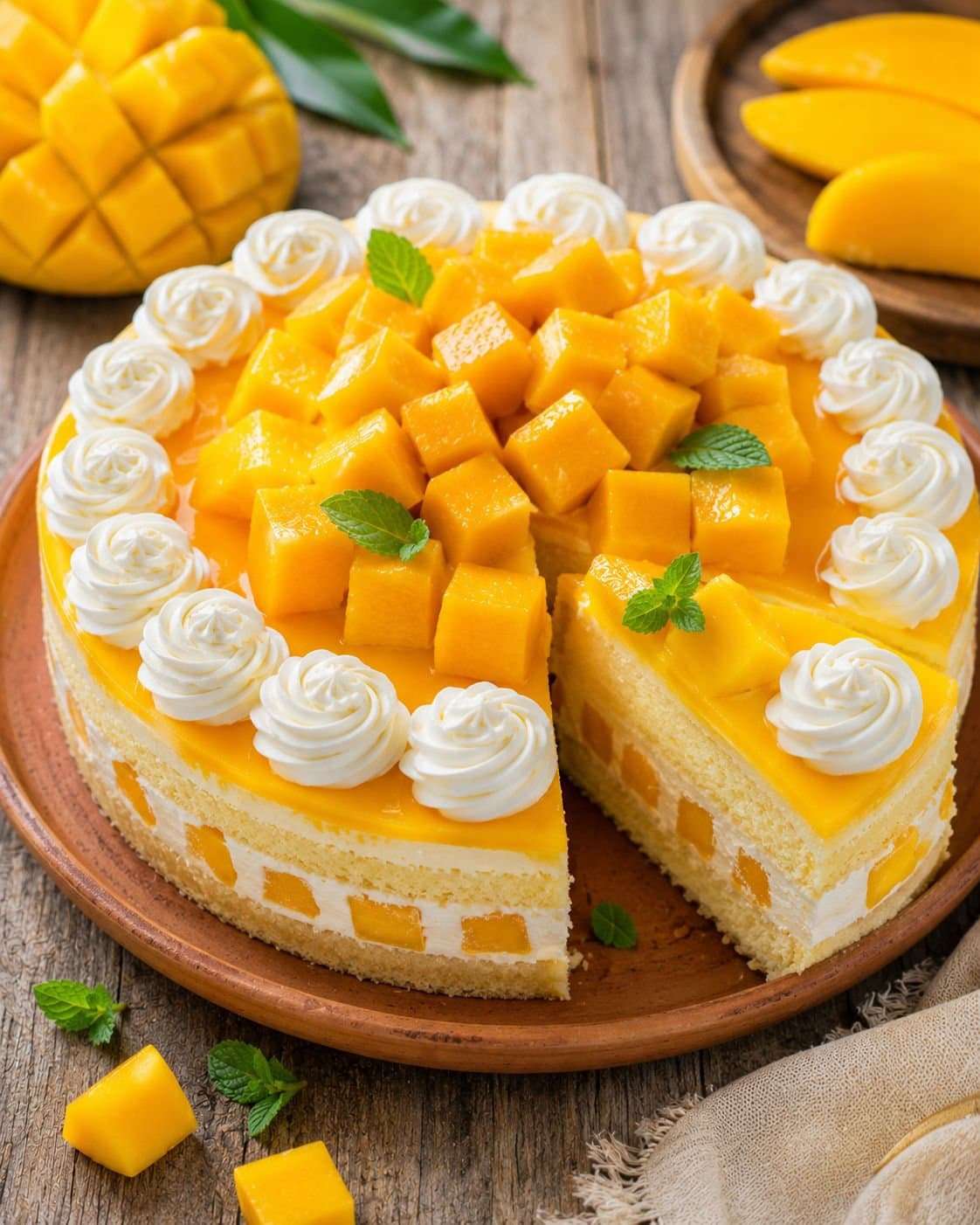 Fresh Mango CakeRs. (3,600.00 - 8,000.00)
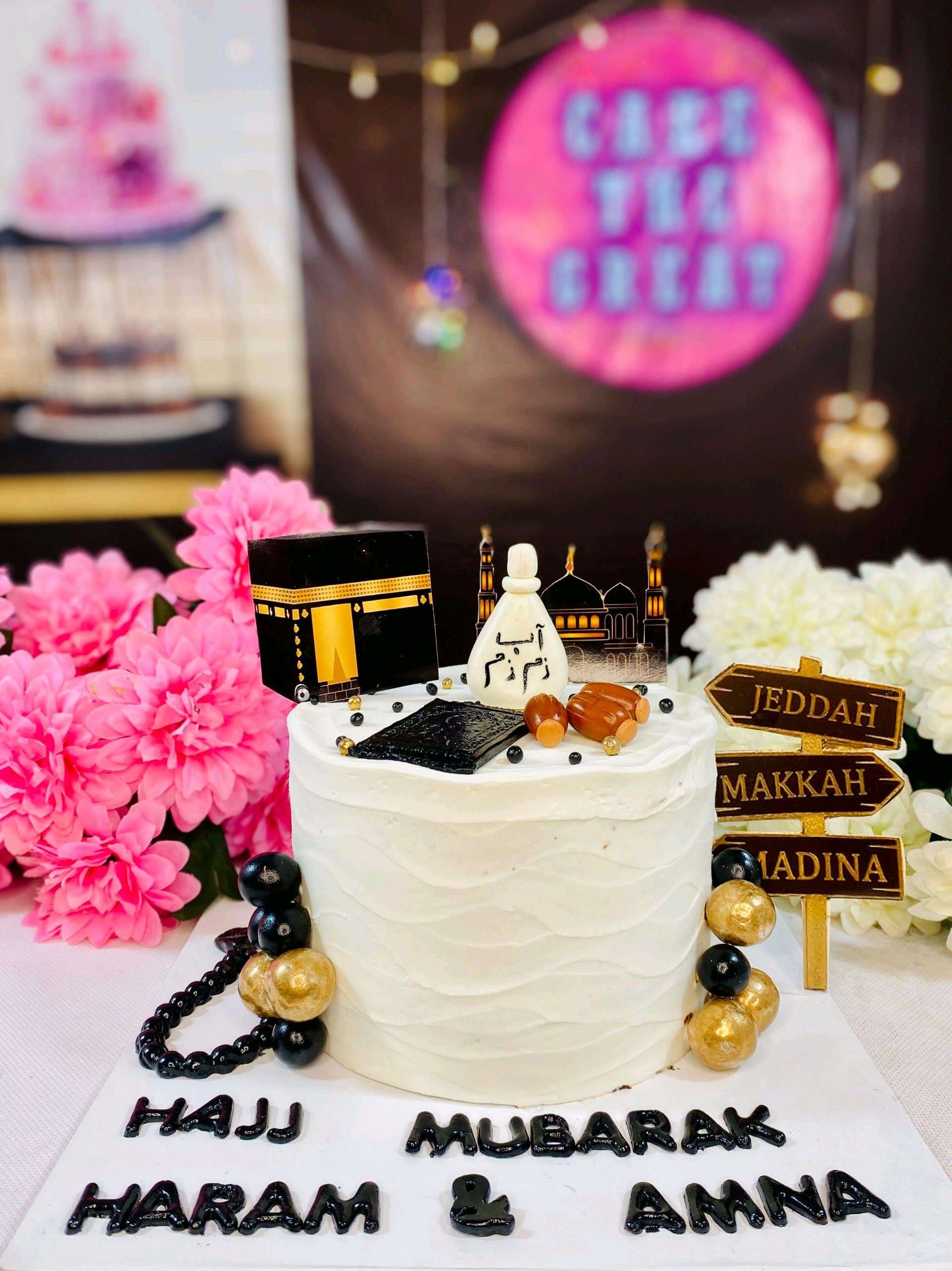 Hajj and Umrah Mubarak CakeRs. (3,600.00 - 9,000.00)
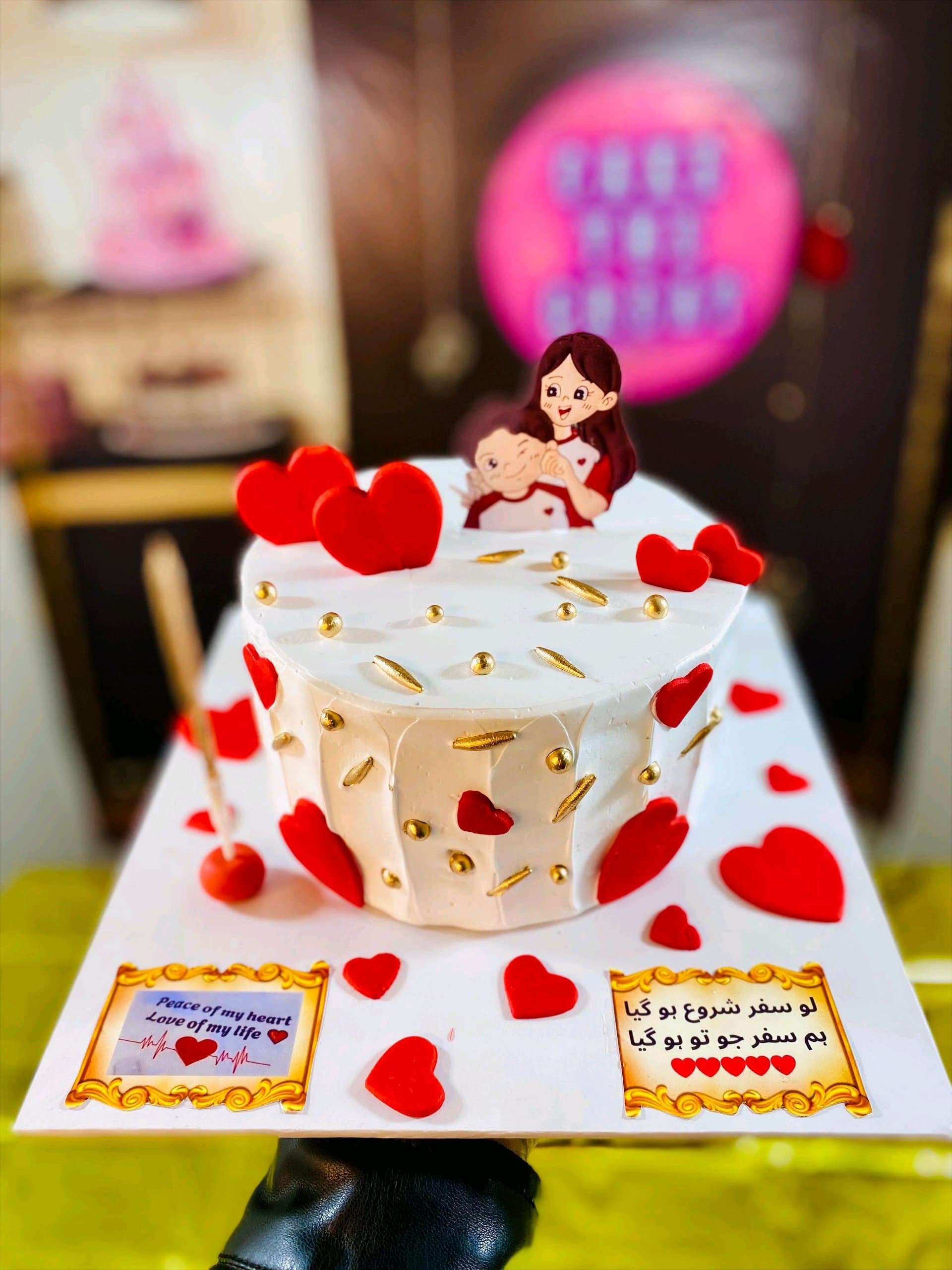 Birthday Cake for WifeRs. (3,800.00 - 9,500.00)